

- 製品一覧
-
ソリューション
- 技術
-
最新情報

ADATA Industrial to Participate in Embedded World 2026 Leading the New Era of AI-Driven Innovation
さらに詳しく
ADATA INDUSTRIAL Unveils AI and Edge Storage Innovations at Embedded World North America 2025
さらに詳しく
ADATA Industrial Releases DDR5 6400 CU-DIMM and CSO-DIMM - Empowering HPC with overclocking speed and extraordinary stability
さらに詳しく- サービス
- 会社情報
- サービス









Monthly Memory & Flash Market Watch
June 2026


Union rally causes Samsung fab production to plummet by 58% during night shift — over 40,000 people attended rally for better pay and bonuses
• The disruption was caused by a large union rally, nearly one‑third of Samsung’s semiconductor fab workforce, showing that even a short labor action can have an immediate and measurable impact on highly automated semiconductor operations. A prolonged strike could undermine Samsung’s lead in next‑generation memory (such as AI‑related chips) and potentially drive customers toward competitors like SK hynix, while also pushing prices higher across the industry.
Kioxia and Dell Technologies first to deliver high-density server with 9.8 PB of flash storage
• The 2 firms demonstrate a major leap in AI storage infrastructure by enabling a 2U server with up to 9.8PB of flash capacity using its LC9 Series 245.76TB NVMe SSDs, highlighting a shift toward ultra-high-density, flash-based architectures. By significantly reducing power consumption, rack space, and total cost of ownership compared to traditional deployments, Kioxia positions its high-capacity SSDs as a key enabler for scaling AI workloads, data lakes, and large-scale analytics efficiently within modern data centers.
SanDisk launches 320/520 SATA SSDs to restore affordable storage
• This move reflects a strategic return to value-oriented SATA products to address supply constraints and restore accessible storage options in a market increasingly dominated by expensive high-performance SSDs. Although limited by SATA interface speeds, these drives focus on affordability, stability, and broad compatibility—making them suitable for budget upgrades, legacy systems, and bulk storage needs.


SK hynix has become a central bottleneck in the AI-driven memory supply chain, with its available capacity effectively fully booked due to surging demand for HBM, DRAM, and NAND. In response, major tech customers are offering to fund new fabs and even purchase costly EUV lithography equipment to secure long-term supply, moving far beyond traditional procurement models. However, SK hynix remains cautious, as accepting such arrangements could limit its pricing power and strategic flexibility in an extremely tight, supplier-driven market.
Micron redefines AI performance with sampling of 256GB DDR5 server module
•This module is built on advanced 1-gamma DRAM and 3D-stacked (TSV-based) packaging, delivers significantly higher bandwidth (up to 9,200 MT/s), capacity, and power efficiency to meet the growing demands of AI workloads such as LLMs and real-time inference. This solution allows data centers to scale AI infrastructure more efficiently within power and thermal limits, accelerating the transition toward high-capacity, performance-optimized server memory architectures.

SUPPLY TREND
2026 – 2027 Worldwide NAND Flash Output

demand for legacy‑node SSDs is minimal within overall SSD shipments. Rapid expansion in AI‑related applications in 2026 is expected to drive sustained growth in demand for mainstream advanced‑node 3D‑type SSD products.
2026-2027 Worldwide DRAM Output

2025-2026 NAND Price Trend & Sufficiency Ratio

Flash Sufficiency: Supply has come under significant pressure from Q3’25 through 2026 1H, as manufacturers phase out DDR4 production and reallocate capacity toward high-demand applications from the CSPs. This shift has led to a pronounced tightening in overall DRAM availability.
Price Trend: contract prices continue to move upward, supported by AI-driven enterprise demand and supply discipline, while spot prices have softened due to weaker channel demand and improved short-term supply. Overall, DRAM prices are likely to continue a steady, gradual uptrend over the course of the year.
2025-2026 DDR4 Price Trend & Sufficiency Ratio

DRAM Sufficiency: Supply has come under significant pressure from Q3’25 through 2026 1H, as manufacturers phase out DDR4 production and reallocate capacity toward high-demand applications from the CSPs. This shift has led to a pronounced tightening in overall DRAM availability.
Price Trend: contract prices continue to move upward, supported by AI-driven enterprise demand and supply discipline, while spot prices have softened due to weaker channel demand and improved short-term supply. Overall, DRAM prices are likely to continue a steady, gradual uptrend over the course of the year.


インサイト
View all
耐用型 SSD :TBW與使用壽命,滿足應用負載
解析工業級SSD的TBW、DWPD、P/E循環與pSLC/MLC/TLC/QLC差異,依監控、網安、邊緣運算等工作負載選對耐用型固態硬碟。威剛工業級提供選型與樣品支援。

如何運用 SSD SMART 掌握儲存硬碟健康?常見參數說明
SSD SMART 是什麼?本文解析 SATA 與 NVMe SMART 差異,說明 Power On Hours、Temperature、Percentage Used、Available Spare 等常見健康參數,協助 Edge Storage 與工業設備掌握 SSD 健康狀態。

車用 SSD 是什麼?AEC-Q100 等級、子系統規格
完整解析車用 SSD :AEC-Q100 IC 溫度等級(Grade 0~3)、IATF 16949、ISO/SAE 21434 資安與 PLP、pSLC 等子系統規格,並比較 eMMC/UFS/SSD 差異。威剛工業級提供車載、鐵道 NVR 與邊緣運算的寬溫儲存方案與選型支援。

NVMe SSDとは?
NVMe SSDとは何か、NVMeとSATA SSDとの違い、そしてNVMeストレージが自動化、産業用システム、および高頻度データロギングに最適な理由について解説します。

ECC DRAMとは?
ECC DRAMとは何か、エラー訂正の仕組み、そしてデータの整合性、システムの安定性、ネットワークセキュリティ、ミッションクリティカルなコンピューティングにおいて重要となる理由について解説します。
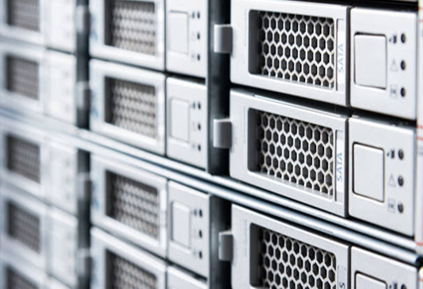
NVRストレージの選び方効率的な監視システムに必要となる重要なポイント
NVRストレージを選定する際の主な検討事項:HDD、SSD、監視用SSD、およびAI NVRのストレージ要件を比較し、安定した高性能監視システムを構築しましょう。