

-
Products
-
Solutions
-
Technology
Read moreProprietary Technologies
ADATA Industrial Team's Proprietary Technologies
 Read moreEndurance
Ultra-Long Lifecycles
Read moreSecurityIndustrial Data Security
Read moreData IntegrityFull-Link Verification
Read moreRuggednessDesigned for Harsh Environments
Read moreStabilityZero-Error Reliability
-
What's New
- Services
- About Us











What Is an NVMe SSD?
Benefits, Performance, and Industrial Applications
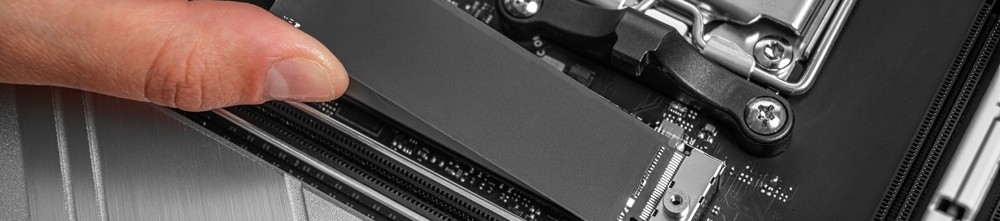
What Is an NVMe SSD? Benefits, Performance, and Industrial Applications

As industrial systems generate larger volumes of real-time data, storage performance has become a critical factor in automation, edge computing, and embedded system design. Traditional storage interfaces can create bottlenecks when handling continuous data logging, machine vision workloads, or industrial analytics. That is why many modern automation platforms are moving toward NVMe SSD technology.
An NVMe SSD uses the PCIe interface and the NVMe protocol to deliver significantly faster data transfer speeds, lower latency, and improved parallel processing compared with legacy SATA-based storage. For automation environments that require stable 24/7 operation, NVMe SSDs help support faster system responsiveness, more efficient data handling, and long-term operational reliability.
What Is an NVMe SSD?
An NVMe SSD is a solid-state drive that uses the Non-Volatile Memory Express (NVMe) protocol over the PCIe (Peripheral Component Interconnect Express) interface. Unlike older storage technologies designed around hard disk drive limitations, NVMe was specifically developed for flash-based storage to maximize speed and efficiency.
Traditional SATA SSDs rely on older AHCI protocols originally built for mechanical hard drives. NVMe removes many of these bottlenecks by allowing the SSD to communicate more directly with the CPU through PCIe lanes.
PCIe-Based Architecture
PCIe provides much higher bandwidth than SATA interfaces. While SATA III is limited to approximately 6 Gb/s, PCIe Gen4 NVMe SSDs can achieve dramatically higher throughput using multiple PCIe lanes. IBM notes that NVMe enables significantly faster data transfer rates and lower latency compared with SATA SSD architecture. This architecture is especially important for automation systems that continuously process sensor data, machine logs, inspection images, or edge AI workloads.
Parallel Processing Capability
One of the biggest advantages of NVMe SSD architecture is its ability to support massive parallel command queues. NVMe supports thousands of parallel queues and commands simultaneously, helping reduce storage bottlenecks during high-frequency data access. NetApp explains that NVMe was designed to improve parallelism and maximize flash storage performance in modern workloads.
For industrial automation, this means faster response times during continuous data acquisition, machine communication, and real-time system monitoring.
Lower Latency for Real-Time Systems
Latency is critical in automation environments. Systems such as PLCs, industrial controllers, robotic platforms, and machine vision equipment often depend on rapid storage response times.
Compared with SATA SSDs, NVMe SSDs reduce latency by streamlining communication between storage and the processor. This allows industrial systems to access and store data more efficiently during continuous operation.
NVMe vs SATA SSD: Performance and Architecture Differences
Although both NVMe SSDs and SATA SSDs use NAND flash memory, their underlying architecture and communication protocols are very different.
Bandwidth Differences
The largest difference between NVMe and SATA is bandwidth. SATA III is limited to approximately 600 MB/s of maximum theoretical throughput, while PCIe-based NVMe SSDs can deliver several gigabytes per second depending on the PCIe generation and lane configuration.
Kingston explains that NVMe SSDs provide substantially higher transfer speeds because they use PCIe lanes rather than the older SATA interface.
For automation systems handling continuous data streams, higher bandwidth allows faster writing of logs, inspection records, and operational data.
IOPS and Queue Depth
NVMe SSDs also support significantly higher IOPS (Input/Output Operations Per Second) compared with SATA SSDs. Because NVMe can process many more commands simultaneously, it is better suited for workloads involving multiple parallel tasks.
This is particularly useful in automation systems running:
- Real-time machine monitoring
- AI-based inspection
- Industrial edge analytics
- Continuous telemetry logging
- Multi-camera image capture
Protocol Efficiency
SATA SSDs use the AHCI protocol, which was originally optimized for spinning hard drives. NVMe was specifically designed for NAND flash memory, allowing more efficient communication between storage and the CPU.
This reduces software overhead and improves overall responsiveness, especially in systems with heavy read/write workloads.
Latency and Responsiveness
Because NVMe reduces protocol overhead and communicates directly through PCIe, it achieves much lower latency than SATA SSDs. In industrial automation environments, lower latency helps support faster machine response and more reliable real-time data handling.
Key Advantages of NVMe SSD for High-Frequency Data Logging

High-frequency data logging is common in automation systems. Industrial platforms often collect sensor data, machine status information, operational metrics, and inspection records continuously throughout the day.
Low Latency for Continuous Recording
NVMe SSDs help reduce delays during data writing and retrieval. This allows systems to process large volumes of incoming data more efficiently, even during peak workloads.
In automation environments, low latency can support:
- Real-time monitoring
- Predictive maintenance systems
- Machine diagnostics
- Industrial AI applications
- Production analytics
Sustained Write Performance
Industrial systems frequently require stable write performance over long periods rather than short bursts of speed. NVMe SSDs designed for industrial applications can maintain more consistent write behavior under continuous workloads.
This is important for systems that generate constant data streams, such as:
- Data loggers
- Surveillance systems
- Automated inspection equipment
- Manufacturing analytics platforms
- Transportation monitoring systems
Endurance and Reliability
Industrial automation systems often operate 24/7, making storage endurance an important selection factor. Enterprise and industrial-grade NVMe SSDs are designed to handle higher write volumes and more demanding environments than standard consumer drives.
Reliable storage helps reduce risks such as:
- Data corruption
- Unexpected downtime
- Logging interruptions
- Premature drive wear
- System instability
Better Support for Edge Computing
As automation moves toward distributed edge architectures, more processing and storage tasks happen closer to the machine or device itself. NVMe SSDs help support this transition by delivering fast local storage performance with compact form factors suitable for embedded systems.
Industrial Applications of NVMe SSD in Automation Systems
NVMe SSDs are increasingly used across industrial automation environments where stable, high-speed storage is required for continuous operation.
PLC and Industrial Controller Systems
Programmable Logic Controllers (PLCs) and industrial control systems may rely on local storage for configuration files, event logging, machine analytics, and firmware management. NVMe SSDs help improve data access speed and support faster system responsiveness.
Data Loggers and Monitoring Equipment
Industrial data loggers collect large amounts of operational data from sensors, equipment, and production lines. Since logging workloads are continuous, storage performance and endurance are critical.
ADATA Industrial’s IM2P42B8 is designed for industrial applications that require PCIe Gen4 performance, stable operation, and reliable data handling for embedded and automation platforms.
Rugged Tablets and Mobile Industrial Devices
Field-service equipment, rugged tablets, and portable industrial systems often require compact storage with low power consumption and fast responsiveness. NVMe SSDs help these devices access and store data efficiently while maintaining portability.
ADATA Industrial’s IM2P41B8 provides an M.2 PCIe SSD solution suitable for embedded and industrial computing environments that require stable high-speed storage performance.
Automotive and Transportation Systems
Automotive systems, fleet management platforms, and transportation monitoring solutions often generate large volumes of telemetry and operational data. NVMe SSDs help support faster storage access and reliable logging under continuous workloads.
For edge computing and automation systems that prioritize efficiency and reliability, ADATA Industrial’s IM2P41E8 provides an industrial NVMe SSD option designed for embedded and long-term operational environments.
How to Choose an NVMe SSD for 24/7 Industrial Operation
Not all NVMe SSDs are optimized for industrial use. Automation systems often operate continuously in demanding environments, so storage selection should focus on more than peak speed alone.
Endurance Rating
Industrial systems may write data continuously for years. Checking the SSD’s endurance rating, such as TBW (Terabytes Written), helps determine whether the drive can handle the expected workload over time.
Higher endurance is especially important for:
- Continuous logging systems
- Surveillance platforms
- AI analytics systems
- Industrial gateways
- Edge computing devices
Thermal Stability
Automation environments may expose storage devices to higher temperatures, vibration, or restricted airflow. Thermal stability is important because overheating can reduce performance or shorten SSD lifespan.
Industrial NVMe SSDs often include thermal management features designed for long-term reliability in embedded environments.
Reliability Features
For industrial operation, reliability features may include:
- Power-loss protection
- Error correction technology
- Wear leveling
- Bad block management
- Health monitoring support
These technologies help improve data integrity and long-term operational stability.
Platform Compatibility
Before selecting an NVMe SSD, system builders should verify compatibility with:
- PCIe generation support
- M.2 form factor requirements
- Embedded motherboard layout
- Operating system support
- Industrial controller specifications
Compatibility is especially important in automation and embedded systems where space, thermal conditions, and interface limitations may vary.
Why NVMe SSD Matters for Modern Automation
As automation systems become more data-driven, storage performance plays a larger role in overall system reliability and responsiveness. An NVMe SSD provides higher bandwidth, lower latency, improved parallel processing, and better support for continuous industrial workloads compared with traditional SATA-based storage.
For applications such as industrial controllers, data loggers, edge computing systems, rugged tablets, and automotive platforms, NVMe SSD technology helps support real-time data handling and long-term operational stability.
To build more reliable automation infrastructure, explore ADATA Industrial’s IM2P42B8, IM2P41B8, and IM2P41E8 solutions and choose the industrial NVMe SSD that best fits your platform’s performance, endurance, and reliability requirements.


Insights
View all
What Is DRAM Memory?
Learn what DRAM Memory is, how it works, and the key differences between DDR4, DDR5, SRAM, and ECC memory, with practical guidance for industrial DRAM selection.

How to Choose Server RAM:
Learn how to choose server RAM, including ECC, UDIMM vs. RDIMM, DDR4 vs. DDR5, memory capacity, platform compatibility, and industrial server applications.

ECC RAM vs. Non-ECC RAM:
Compare ECC RAM vs. Non-ECC RAM and learn how ECC Memory corrects memory errors, how DDR5 On-Die ECC differs from system-level ECC, what platform compatibility requirements to consider, and how to choose between ECC UDIMM, RDIMM, and SODIMM for medical, networking, NVR, Edge AI, and transportation applications.

What Is Signage Storage?
Signage Storage supports the local storage requirements of Digital Signage, POS, kiosks, and AI retail systems. Explore key SSD selection factors, including interface, capacity, endurance, operating temperature, PLP, S.M.A.R.T. monitoring, and fixed BOM.

High-Endurance SSD: TBW and Service Life for Real-World Workloads
Learn how TBW, DWPD, P/E cycle, and pSLC, MLC, TLC, and QLC affect industrial SSD endurance. Choose the right SSD for surveillance, cybersecurity, and edge workloads with support from ADATA Industrial.

How to Use SSD SMART Data to Monitor Drive Health?
What is an automotive SSD? Learn how AEC-Q100 grades, IATF 16949, PLP, pSLC, encryption, and wide-temperature design affect SSD selection for in-vehicle and transportation systems.