














Monthly Memory & Flash Market Watch
August 2023


Samsung initiates mass production of UFS 3.1
• This latest automotive memory solution offers the industry’s lowest energy consumption and addresses a wide range of customer needs for optimized in-vehicle infotainment (IVI) systems.
• Samsung aims to expand its presence in the automotive semiconductor market and plans to supply the UFS 3.1 series to global automakers and parts manufacturers by 2023/E.
WDC is trying to reach a deal with Kioxia in August, 2023
• Most of the value in the deal would come from the HDD unit, as WDC posted sales of $1.5B in 2Q23.
• With a mid-30% share, the potential combined company is expected to take on Samsung in the all-important NAND market.


SK Hynix sees DRAM market recovery in its 2nd quarter financial results.
• ASP of DRAM increased due to higher sales of AI servers or other high-end applications.
• Hynix plans to bolster its sales of HBM3, DDR5 , LPDDR5, and 176-layer 3D NAND-based SSDs in a bid to increase revenue, as these products lead to a 44% sequential increase in revenue for the 2nd quarter.
• The company projects a stable demand for AI memory and anticipates a more pronounced effect of production cuts by memory manufacturers.
Micron preps 32Gb DDR5 Chips and high-capacity memory modules in 1H 2024.
• As 1st company to introduce 24Gb DDR5 memory devices and start shipping actual modules, Micron’s 32Gb DDR5 IC will be made on its most advanced production node,1β fabrication technology.
• DDR5 DRAM ICs are particularly useful for datacenter-grade memory modules as they benefit more from high-capacity DRAMs.

SUPPLY TREND
WW SSD Shipment

Q3 worldwide SSD shipment is expected to have higher grow rate than 2Q23.
WW DRAM Output

NAND Flash 512Gb TLC Contract Price and Sufficiency, 2022 - 2023

NAND Sufficiency: The over supply status of NAND Flash will possibly turn around in 4Q23.
Price Trend: NAND Flash price trend almost equal to contract low and seems to be bottoming out.
DDR4 8Gb 1G*8 3200MHz ASP and Sufficiency , 2022-2023

DRAM Sufficiency: DRAM oversupply status keeps improving due to production cuts implemented vendors.
Price Trend: DRAM spot price may increase slightly in 2023/E, while 8Gb DDR4 chip price remains flat below the spot price level.
SUPPLY SIGNAL
| Type | Supply | Price | |
|---|---|---|---|
|
DRAM Module  |
DDR3 | ● | ▂ |
| DDR4 | ● | ▂ | |
| DDR5 | ● | ▂ | |
|
Flash Storage  |
SLC | ● | ▂ |
| MLC | ● | ▂ | |
|
3D TLC (BiCS3) *Limited Supply. We encourage you to migrate to BiCS4 and BiCS5 |
● | ▂ | |
| 3D TLC (BiCS4) | ● | ▂ | |
| 3D TLC (BiCS5) | ● | ▂ |
● Smooth supply ● Tight supply ▂ Flat ▲ Upward trend ▼ Downward trend
WORK WITH ADATA


Insights
View all
How to Choose Industrial SSD for Medical Devices?
Medical devices are rapidly becoming more digital. From medical imaging systems, patient monitoring devices, endoscopy systems, and automated dispensing cabinets to healthcare edge gateways, an increasing number of healthcare applications must continuously record medical images, sensor data, operation logs, alarm events, and system status while supporting diagnostic and treatment workflows.

What Is an NVMe SSD?
Learn what an NVMe SSD is, how NVMe differs from SATA SSDs, and why NVMe storage is ideal for automation, industrial systems, and high-frequency data logging.

What Is ECC DRAM?
Learn what ECC DRAM is, how error correction works, and why it matters for data integrity, system stability, networking security, and mission-critical computing.

How to Choose NVR Storage: Key Factors for Efficient Surveillance Systems
NVR storage is not only about capacity planning. It also affects data integrity and long-term system reliability. For AI NVR and 24/7 recording environments, storage devices must handle heavy write workloads, RAID rebuilding, and continuous recording. As a result, choosing between HDD vs. SSD and selecting the right surveillance SSD have become critical for modern surveillance deployment.

What Is the SSD Temperature Range?
Temperature is the silent limiter of every SSD, and the SSD temperature range is both a performance spec as well as a reliability spec. Under sustained load, NVMe firmware tracks a composite temperature and will start to throttle lightly or heavily. So, write throughput drops hard and latency spikes. Heat also speeds charge leakage inside NAND, which accelerates retention loss. The effect worsens as cells age from program/erase wear. Thus, you burn endurance faster and raise data-retention trouble when the drive later remains unpowered.
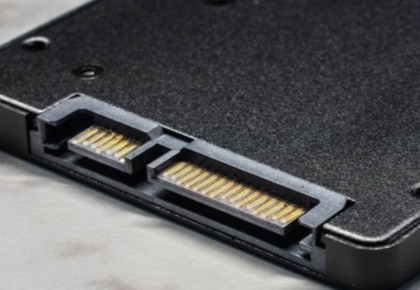
Garbage Collection in Industrial SSDs: What You Need to Know
Garbage collection in SSDs is the controller's quiet cleanup job. It compacts still-valid pages into new space and erases blocks that are now mostly junk. That might sound weird until you remember NAND flash can't overwrite a programmed page. It must erase first, and erase happens at the block level, not per page. So, updates become "write elsewhere, then clean later."