

-
Products
-
Solutions
-
Technology
Read moreProprietary Technologies
ADATA Industrial Team's Proprietary Technologies
 Read moreEndurance
Ultra-Long Lifecycles
Read moreSecurityIndustrial Data Security
Read moreData IntegrityFull-Link Verification
Read moreRuggednessDesigned for Harsh Environments
Read moreStabilityZero-Error Reliability
-
What's New
- Services
- About Us











How to Choose Industrial SSD for Medical Devices?
Complete Guide to Healthcare Storage and PLP SSD
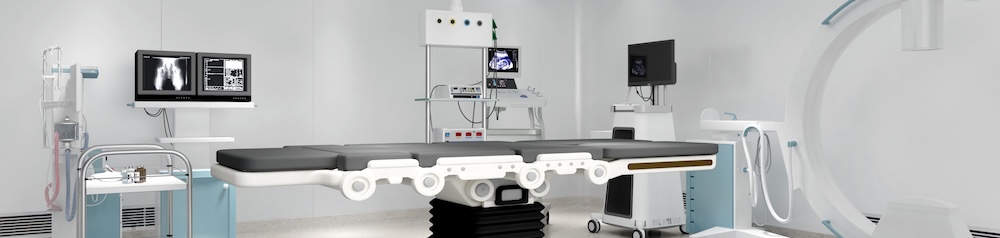
How to Choose Industrial SSD for Medical Devices? Complete Guide to Healthcare Storage and PLP SSD

For medical device manufacturers, storage is no longer just a capacity specification. It has become a critical component that directly affects data integrity, system reliability, and product lifecycle management.
If an SSD experiences a power failure, intensive write workload, or prolonged 24/7 operation, it may lead to corrupted image files, lost event logs, interrupted data traceability, and higher maintenance and revalidation costs.
Therefore, when selecting an industrial SSD for medical devices, manufacturers should evaluate more than capacity, performance, and cost. Important considerations include Power Loss Protection (PLP), a Fixed Bill of Materials (Fixed BOM), write endurance, industrial-grade environmental reliability, firmware support, and long-term product lifecycle availability.
Why Do Medical Devices Need Industrial SSD?
Medical devices operate in more demanding environments than commercial systems. Industrial SSD are designed for continuous operation, intensive write workloads, harsh conditions, and long-term product availability.
By comparison, consumer SSD are intended for PCs and general office applications, where operating conditions are more stable and product lifecycles are typically shorter.
What Is PLP SSD? Why Do Medical Devices Need Power Loss Protection?
PLP (Power Loss Protection) protects data when a device unexpectedly loses power. PLP SSD helps preserve data that is still being written, reducing the risk of data loss and file system corruption.
In medical devices, PLP SSD helps protect critical records throughout the healthcare workflow, including:
- The latest image data captured by ultrasound systems
- The most recent usage records from endoscopy cabinets
- Medication access events in automated dispensing cabinets
- Alarm events and vital sign data from patient monitoring systems
- Login records and clinical document updates on mobile medical carts
- Cached sensor data and synchronization logs stored on healthcare edge gateways
As a result, PLP SSD serve as the last line of defense for data integrity in healthcare storage systems.
How Does PLP SSD Reduce the Risk of Medical Data Loss?
PLP SSD works by preserving critical data when an unexpected power loss occurs, rather than immediately stopping all write operations.
This capability is especially important for medical devices, where data is generated and written in real time and often cannot be recreated.
For example, every endoscope checkout, return, disinfection update, and user authentication creates a traceable record. If a power failure occurs during the write process, the latest record may be lost, creating a gap in the audit trail.
Choosing the Right PLP SSD for Medical Device OEMs
For medical device OEMs, SSD selection should go beyond capacity and interface speed to include product lifecycle, data integrity, and long-term maintenance considerations.
1. Hardware PLP and Firmware Protection Mechanisms
Hardware PLP uses capacitors to provide backup power, while firmware protection helps the SSD preserve critical data and maintain system integrity during unexpected power interruptions.
2. Write Endurance for Continuous High-Write Workloads
An SSD should deliver consistent write performance rather than peak speed to support continuous write workloads and minimize performance fluctuations.
3. pSLC Support and High-Endurance Design
pSLC technology enhances NAND endurance and write stability for medical applications requiring continuous recording, frequent writes, and high reliability.
4. Industrial-Grade Wide-Temperature and Environmental Reliability
Medical devices may operate in varying temperatures, humidity, vibration, and mobile environments. Industrial-grade SSD with wide-temperature support and environmental reliability help ensure stable operation and data integrity.
5. Fixed BOM and Long-Term Product Availability
Fixed BOM helps maintain consistency in the controller, NAND flash, firmware, and other key components, reducing revalidation costs caused by component changes.
6. Firmware Customization Support
Firmware customization enables SSD to be optimized for specific medical applications, improving system stability, compatibility, and data reliability.
7. ECC Memory Support for Enhanced Data Integrity
ECC DRAM detects and corrects memory bit errors, helping reduce the risk of silent data corruption in critical medical data.
Healthcare Storage Applications in Smart Medical Devices

As healthcare storage becomes more intelligent, SSD are being deployed across a wider range of medical devices and edge computing applications. ADATA Industrial recommends PLP SSD for the following use cases.
1. Medical Imaging Systems
PLP SSD help reduce the risk of data corruption during image writing caused by unexpected power loss while delivering reliable write performance through an industrial-grade design.
2. Endoscopy Imaging and Recording Systems
PLP SSD help protect the latest records during unexpected power loss or system shutdown, reducing the risk of gaps in traceability.
3. Automated Dispensing Cabinets (ADCs)
PLP SSD improve the reliability of transaction records by reducing the risk of data inconsistency caused by unexpected power loss.
4. Patient Monitoring Systems
Industrial-grade SSD support continuous operation and intensive write workloads, while PLP helps reduce the risk of critical data loss during unexpected power loss.
5. Mobile Medical Carts and Point-of-Care Systems
When mobile medical carts are accessing patient records, documenting medication administration, or updating clinical documents, PLP SSD help protect data being written during unexpected power loss.
6. Healthcare Edge Gateways
These systems require industrial-grade storage with high reliability, endurance, and power loss protection for distributed deployments.
How ADATA Industrial Supports Healthcare Storage for Medical Devices
ADATA Industrial specializes in industrial-grade storage and memory solutions, helping medical device OEMs, system integrators, and healthcare platform developers build reliable healthcare storage architectures.
For medical applications requiring power loss protection and high data integrity, ADATA Industrial offers PLP SSD, including the ISSS31CP and IM2S31I8P, for medical imaging, patient monitoring, endoscopy, automated dispensing cabinets, mobile medical carts, and healthcare edge computing.
With hardware-based PLP and industrial-grade firmware management, these SSD help protect data being written during unexpected power loss, reducing the risk of data loss and incomplete records.
ADATA Industrial also offers industrial-grade memory modules, including DDR4 ECC SODIMM and DDR5 ECC UDIMM. ECC memory helps detect and correct memory bit errors, making it ideal for medical imaging, edge computing, and other high-reliability healthcare systems.
Beyond storage and memory products, ADATA Industrial supports medical device OEMs throughout development, validation, and mass production. With Fixed BOM, PCN management, and technical support, it helps ensure product consistency and reduce long-term maintenance risks.
Healthcare Storage and PLP SSD FAQs
1.Industrial SSD vs. Consumer SSD: What's the Difference?
Industrial SSDs are designed for continuous operation, harsh environments, intensive write workloads, and long-term product availability. In contrast, consumer SSD are primarily optimized for general computing, cost, and short-term performance. For medical devices, industrial SSD are better suited to meet the requirements for data integrity, system reliability, and long product lifecycles.
2.Can PLP SSD Replace UPS?
PLP SSD cannot fully replace UPS.
UPS provides backup power at the system level, while PLP SSD protects data at the storage level. Together, they complement each other: UPS helps keep the system running or enables a safe shutdown, while PLP SSD helps preserve data that is still being written during unexpected power loss.
3.Why Is Fixed BOM Important for Medical Devices?
Medical devices typically require long-term validation, mass production, and ongoing maintenance. Frequent SSD component changes can lead to compatibility issues and increased revalidation costs. Fixed BOM helps maintain consistent controllers, NAND flash, firmware, and other key components, reducing long-term maintenance risks for medical device OEMs.
4.What Is the Role of ECC Memory in Medical Devices?
ECC memory can detect and correct certain memory errors, helping reduce the risk of silent data corruption during data processing. For medical imaging, patient monitoring, healthcare edge computing, and other high-reliability applications, ECC DRAM helps improve overall data integrity and system reliability.


Insights
View all
What Is DRAM Memory?
Learn what DRAM Memory is, how it works, and the key differences between DDR4, DDR5, SRAM, and ECC memory, with practical guidance for industrial DRAM selection.

How to Choose Server RAM:
Learn how to choose server RAM, including ECC, UDIMM vs. RDIMM, DDR4 vs. DDR5, memory capacity, platform compatibility, and industrial server applications.

ECC RAM vs. Non-ECC RAM:
Compare ECC RAM vs. Non-ECC RAM and learn how ECC Memory corrects memory errors, how DDR5 On-Die ECC differs from system-level ECC, what platform compatibility requirements to consider, and how to choose between ECC UDIMM, RDIMM, and SODIMM for medical, networking, NVR, Edge AI, and transportation applications.

What Is Signage Storage?
Signage Storage supports the local storage requirements of Digital Signage, POS, kiosks, and AI retail systems. Explore key SSD selection factors, including interface, capacity, endurance, operating temperature, PLP, S.M.A.R.T. monitoring, and fixed BOM.

High-Endurance SSD: TBW and Service Life for Real-World Workloads
Learn how TBW, DWPD, P/E cycle, and pSLC, MLC, TLC, and QLC affect industrial SSD endurance. Choose the right SSD for surveillance, cybersecurity, and edge workloads with support from ADATA Industrial.

How to Use SSD SMART Data to Monitor Drive Health?
What is an automotive SSD? Learn how AEC-Q100 grades, IATF 16949, PLP, pSLC, encryption, and wide-temperature design affect SSD selection for in-vehicle and transportation systems.